
August 28, 2026
Laser Resurfacing, Microneedling & PRP in Frisco: Treating Sun Damage, Fine Lines & Rosacea
Medically reviewed by
Founder & Board-Certified Family Nurse Practitioner
Last reviewed
Which Skin Concern Points to Which Treatment
Non-surgical facial rejuvenation in Frisco covers a wider toolkit than most patients expect, and the concern you're treating usually narrows it fast. Sun damage, hyperpigmentation and age spots respond best to a wavelength that targets pigment. Fine lines and texture respond to resurfacing or collagen induction. Skin tightening and collagen stimulation need heat delivered to a specific depth. Rosacea needs a wavelength that targets blood vessels, not pigment — using the wrong device for the concern is why a treatment can look 'fine' but never quite solve what brought someone in.
A proper consultation matches the concern to the modality before it matches the modality to a package price. The sections below cover the main options and what each one actually reaches.
Laser Skin Resurfacing: Fractional vs Full, and Where Fotona Fits
Laser skin resurfacing removes precise microscopic layers of skin, prompting the body to rebuild them smoother and more even. Depth is adjustable — a light fractional laser session means a day or two of flaking, while full resurfacing means about a week of visible recovery for a correspondingly larger change. Fractional treats columns of skin and leaves untreated tissue between them to speed healing; full resurfacing treats the whole surface for maximum correction. CO2 and Erbium are the two wavelengths most resurfacing lasers are built around, and depth of penetration is what's matched to your skin and your schedule, not the brand name.
Fotona laser treatment works differently: the Fotona 4D Facelift is a four-step protocol that combines a resurfacing pass with deep, non-ablative heating — including energy delivered from inside the mouth to tighten the nasolabial area from behind. It suits patients after gradual, no-downtime tightening across a series rather than a single more intense resurfacing session.
Microneedling & PRP Facials: Building Collagen From Within
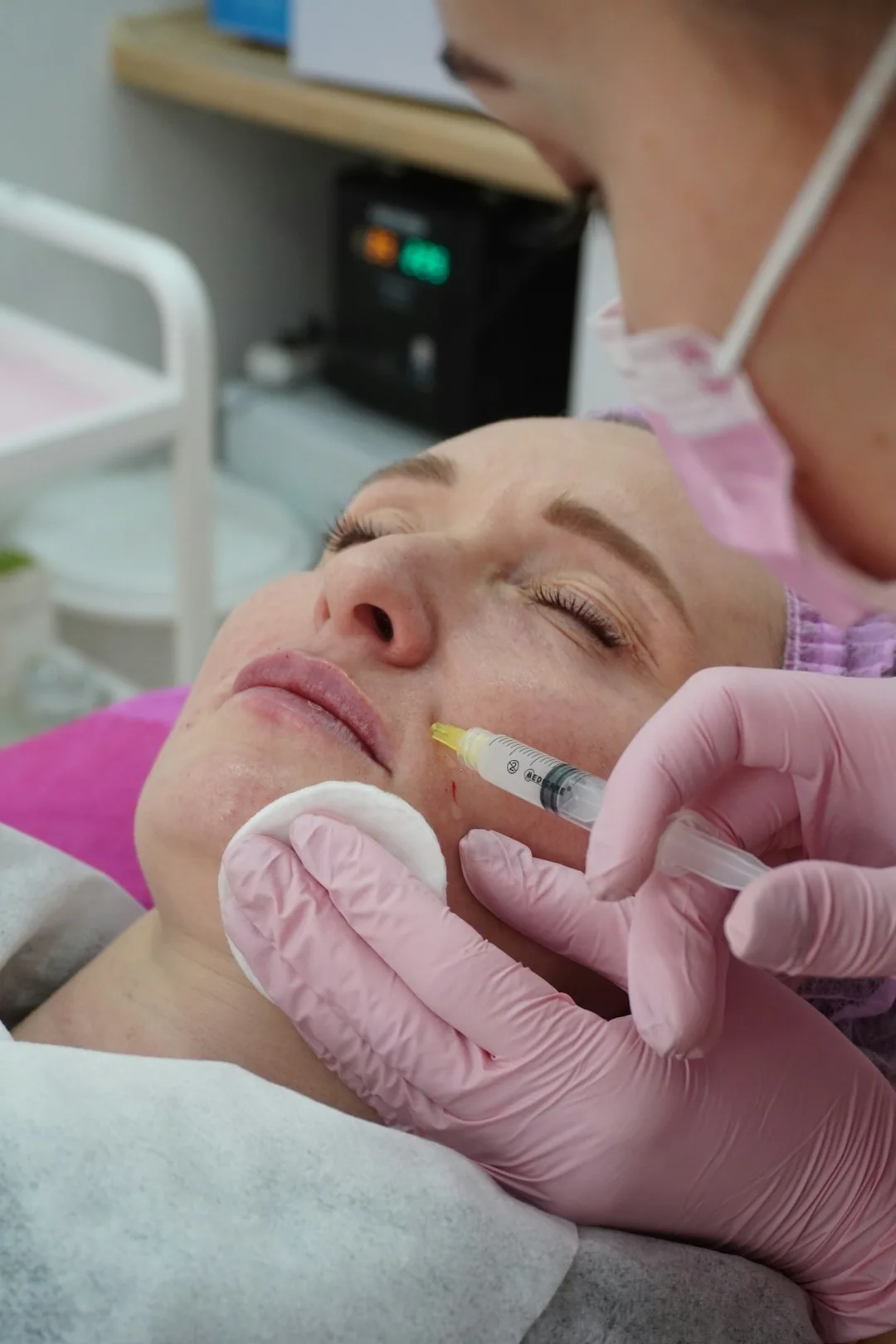
Microneedling creates thousands of controlled micro-channels with fine needles, triggering a wound-healing response that produces new collagen — it works on most skin types because it's a mechanical stimulus rather than light absorbed by pigment, which makes it a reliable option for acne scarring, enlarged pores and fine lines. A course of 3–4 sessions a month apart is standard, with results building over 4–6 weeks per session.
A PRP facial adds your own platelet-rich plasma into those channels. Blood is drawn and spun to concentrate the platelets, then applied to the skin, where the growth factors they release amplify the collagen response. You may also see PRF treatment mentioned as a newer, related option — plasma prepared without an anticoagulant, spun to keep more white cells and a fibrin scaffold intact. We currently work with PRP rather than PRF; if you're specifically comparing the two, it's worth raising at consultation so we can talk through what each actually adds for your skin.
Treating Sun Damage, Hyperpigmentation & Age Spots
Sun damage, hyperpigmentation and age spots are pigment problems, so the most direct treatment targets pigment specifically. Q-switch laser treatment breaks down unwanted pigment particles with short, high-energy pulses, revealing a brighter, more even complexion with minimal downtime — it's usually the first thing we reach for on stubborn brown spots and sun-damaged patches that haven't responded to skincare alone.
Laser skin resurfacing addresses pigmentation too, but as part of a broader resurfacing effect rather than a pigment-specific one — it's the better fit when texture and tone are both part of the picture, not just discrete spots.
Rosacea & Fine Lines: Different Problems, Different Lasers
Rosacea treatment uses a vascular-targeted laser wavelength absorbed by haemoglobin, closing the dilated vessels responsible for facial redness and flushing without damaging the surrounding skin. It's a chronic condition, so the goal is control rather than cure — most patients need 2–4 sessions a month apart, with maintenance once or twice a year, and managing triggers like heat, alcohol and sun lengthens the gap between visits.
Fine lines treatment depends on whether the lines move with expression or stay put at rest. Expression lines are usually a Botox or Dysport conversation. Static, resting fine lines respond better to resurfacing, microneedling or a skin tightening device — treating the surface rather than the underlying muscle.
Building a Non-Surgical Facial Rejuvenation Plan
Most patients end up combining two or three of these rather than picking one. Skin tightening using radiofrequency, ultrasound or laser energy heats the dermis to contract existing collagen and stimulate new collagen over the following months — it pairs naturally with resurfacing or microneedling, since one improves structure and the other improves surface quality. None of it is guesswork at the point of booking: we assess which layer of your skin the concern actually lives in, then build the plan around that.
You might also like